If your AI subscriptions feel like they've gotten out of control, you're not alone. I'm currently paying for eight different tools, and the total lands somewhere in the mid-high hundreds a month. The truth is most teams don't need more AI subscriptions. They need to actually use the ones they already have.
This isn't an anti-AI rant. I'm all in on AI. I'm just anti paying for tools that never make it into a real workflow.
Here's my stack, what each one is actually good at for enterprise sales and research, and which one I'd keep if I had to cancel everything else.
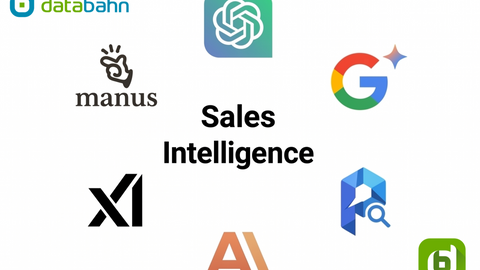
My current AI stack
ChatGPT was the first one I subscribed to, and at this point it's my generalist: long-form thinking, drafting, brainstorming, quick what-ifs. When I need to sanity-check something or reshape content into a different tone, it's still a solid workhorse.
Perplexity is my go-to research engine. It's excellent at crawling specific websites, pulling from earnings call transcripts and SEC filings, and structuring all of that into something usable. For strategic account research, public company intel, or "show me everything about this initiative," it earns its keep.
Grok is cheap, fast, and decent at surfacing current sales trigger events, quick signals like news or changes that might justify outreach. It's a low-friction way to get a pulse on something without overthinking the prompt.
Gemini, paired with NanoBanana, matters because it's Google. For up-to-date, broad knowledge it's genuinely strong, and NanoBanana turns that into a good way to generate images and visuals to spec. When I need search-grade awareness combined with image creation, this combo is hard to beat. Some of the other platforms are still working off information that's six months stale.
Claude, if I had to describe it in one line: great at everything, especially complex reasoning. I lean on it for thinking through tricky problems, modifying code, and helping build or refactor small applications. When I need something that understands structure and logic and not just text, this is where I go.
n8n plus APIs is the connective tissue. I use n8n to build workflow agents, one of mine builds personalized cold prospecting emails end to end: it researches with Perplexity, fact-checks in ChatGPT, then assembles a full sequence or cadence. This is where AI stops being "chat" and becomes actual automation.
Synthesia is what I use to build the humanoid AI videos, like the one on the Databahn home page. For explaining an offer, onboarding, or personalized video at scale, it's a specialized but genuinely useful piece of the stack.
Manus sits above all of it. It connects large volumes of information and turns that into real deliverables: deep-dive research, strategic account dossiers, full PowerPoint decks. For sales intelligence and enterprise account strategy work, it's the closest thing I have to an autonomous strategic sales intelligence analyst that can also build the slides. It's also the one that gets expensive fastest once you start pushing token limits on heavy jobs.
The real problem: under-using what you already pay for
Here's what I see across most sales teams. They've got one or two of these tools on a corporate card, sometimes more, but day to day it comes down to "help me rewrite this email," "summarize this PDF," "polish this LinkedIn post." That's the whole usage pattern.
The tools aren't wrong. The problem is teams are barely scratching the surface of what those tools can do for sales intelligence. No deep strategic account research workflows. No real multi-tool agents wired into prospecting. No consistent way to turn raw data into account plays and decks. Meanwhile the subscription meter keeps running.
In enterprise, strategic-account work, the question isn't which AI to add next. It's: given what you already pay for, where could you go deeper and actually build workflows that generate new pipeline, better account plans, and better conversations?
If I had to keep only one: Manus
If I had to cancel everything tomorrow and keep one paid subscription for sales intelligence work, I'd keep Manus. (I'm not affiliated with Manus, and this isn't an endorsement, just what I've seen using it.)
Not because the others are weak, they're all strong at what they do, but because Manus lets me connect a huge amount of data into one place: docs, URLs, transcripts, briefs. It behaves like a multi-role virtual deal team, analyst, strategist, product marketer, account insider, all at once. And it produces outputs that actually matter in enterprise sales: deep-dive account reports, strategic plays, client-ready decks.
It's not cheap once you push it hard. But measured against return on time and pipeline, it's the one that consistently gives me leverage I can't get anywhere else. One tool used deeply is almost always worth more than seven tools used casually.
How I'd think about your own stack
If you're in enterprise sales, sales leadership, or revenue ops, here's a simple way to audit what you're paying for. List every paid AI tool you're on, actually write them down, including the $20 to $30 a month "no-brainer" plans that quietly stacked up. For each one, name a specific workflow it supports that directly impacts pipeline or account strategy. If you can't name something you run weekly, or at least monthly, you're probably under-using it. Then pick one tool to go much deeper on for 90 days: make it your primary workhorse, build real workflows around it (account research, play creation, messaging, agents), and push it past "nice demo" into something that actually changes how you work. Only after that should you decide whether you need another subscription.
Most teams don't need more AI. They need to go deeper on the AI they already have.
If you're curious why Manus is the one I'd keep for sales intelligence work, connect with me on LinkedIn and drop "One Tool" in your message. I'll send over a short breakdown of how I actually use it.
Sources: